| Article Index |
|---|
| Interpreting Law 30: The “sausage law” a challenge to democracy |
| Page 2 |
| All Pages |

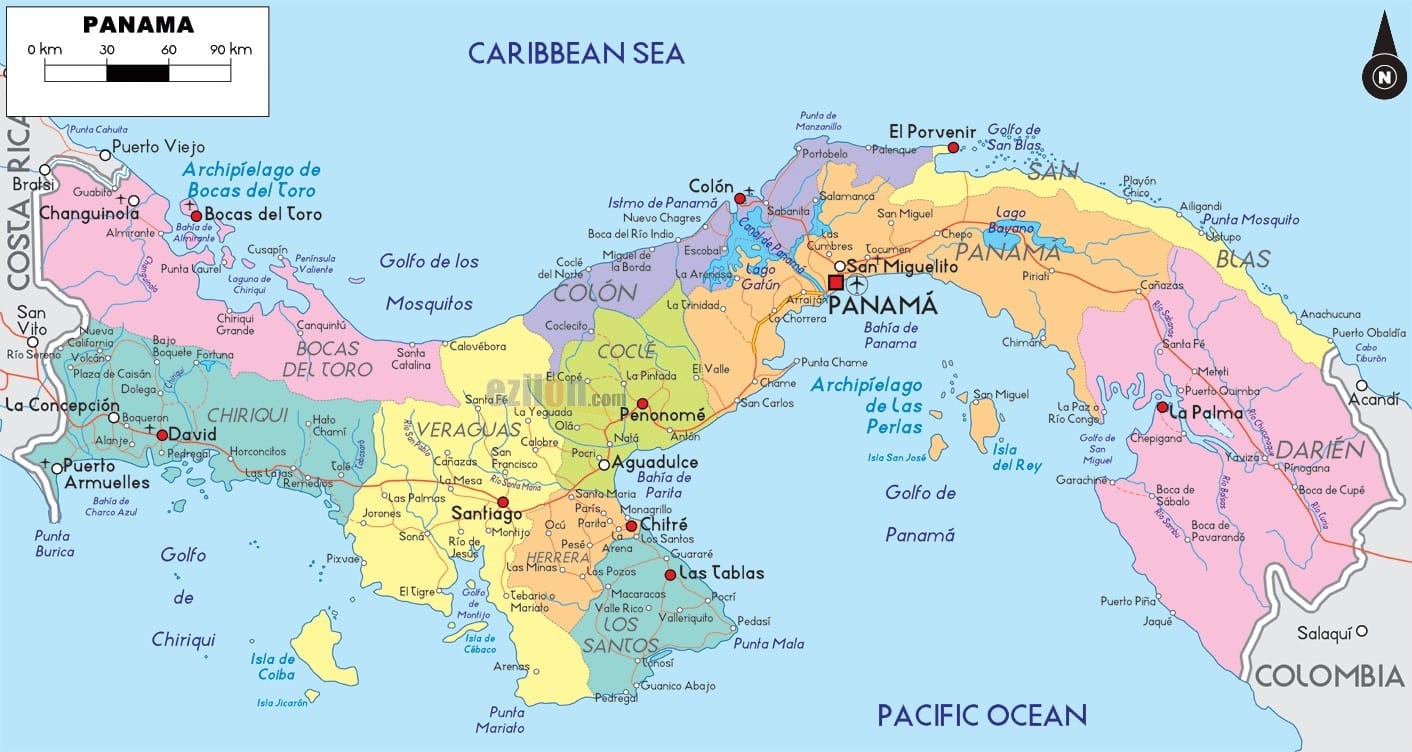
Demonstrations against the controversial law 30, popularly known as the 9- in-one or “sausage” law have swept the country and led to deaths, scores of serious injuries and arrests and, in the eyes of some, police intimidation.
Readers have frequently asked for an explanation of the law, and what it means.
This week the government has called for a national dialogue, and has set up a committee representing many groups, to consider the law.
Our legal columnist, provided this interpretation:
By Yasser Williams Arosemana
There is something everybody living in this country must have heard or read about; the Panamanian Assembly approved a very controversial law, which allegedly had the objective of “promoting the sustainable development of the commercial aviation in Panama and other development activities in the country, as well as establishing conditions in order to educate the Panamanian human resource, for it to be able to receive the benefits of such development”.
If someone reads the first article of law 30 which contains the objective of the law, it would be impossible for that person to understand how a document regarding commercial aviation has created so many adverse reactions from a great number of organizations and people in general.
In reality, the nickname created for this law seems to suit it well: there are changes involving aviation (Law 21 of 2003), but also additions and/or modifications to the Criminal Code, the Labor Code, the Judicial Code, Law 6 of 1997, Law 18 of 1997, Law 41 of 1998, Law 22 of 2006 and Law 67 of 2008.
I have asked some people if they know how a sausage is made and fortunately for them, they do not know. They might not eat sausage again if they find out. On the other hand, combining 9 different subjects in an aviation law is a process that has given me the same upset stomach I once had when a friend felt compelled to share his knowledge about “the art” of sausage making.
I will avoid discussing how irresponsible it is for our lawmakers to discuss and approve within one law several subjects that have absolutely no connection. Among the requirements stipulated by the Panamanian Law for someone to become part of the National Assembly, there should be a proposal to include common sense as the most important one.
But I shall try to remain distant from the political aspects and focus on dissecting the most controversial points of this law, especially for those who are still unaware of what the sausage law is about.
- Labor law:
o Union fees. It is no longer obligatory to deduct the union fees from workers that who to a workers union; the workers will have to pay the fee voluntarily. This seems to have a political connotation besides the economical one, since some union organizations have been gaining a lot of power and media attention in the past few years (perhaps they could have created a party somehow economically independent from donations).
o Legal strikes. Whenever a legal strike is declared, the Labor Code used to order the immediate closure of the business, company or establishment involved. This order was not vulnerable to any type of legal actions or recourses besides deeming the strike as illegal. With law 30, this changes completely. What this means for the workers is that the legal strikes might no longer generate coercion to the businesses or establishments involved, loosing most of their leverage.
o Hiring new employees during legal strikes. The door is opened to allow employers to hire new employees during the legal strike, (known in union circles as blacklegs) which could result in affecting the job positions of some or most of the employees participating in the strike.
- Law 18 of 1997: Preventive incarceration and Police officers. Whenever a member of the Public Force is accused of committing a felony while on duty due to the use of excessive or unjustified force, there will not be preventive incarceration or suspension of his /her duties until a judge renders his decision. During the process, the officer will only handle administrative work, outside the area where the events occurred, without having any direct participation in field operations. You might be wondering, what does this mean?.
Let me give you an example: there is a police officer involved in the pursuit of a thief. The thief is unarmed but has his hand in his pocket when the officer has him cornered. Before the thief pulls his hand out of his pocket, the police officer shoots him in the head. The thief is a teenager who was shoplifting and had his hand around his mobile. The thief is your son. Would you feel safe accusing a person who has killed your son and is free, knowing that you will be providing your address and he is armed and deals with real criminals? I certainly would not.
Perhaps the same question is roaming inside the brains of the relatives of those who died or the 18 that were partially or totally blinded in Bocas del Toro by the use of pellets from the police. Where were they aiming to that they ended up hitting their eyes?